Tuesday, September 15, 2009

Sensor, Walk With Me


Today, as per our first Physical Computing assignment, I took the walk from ITP uptown to pick up my laundry in Chelsea.  Here's a log of some of the more notable sensors I saw in my environment.
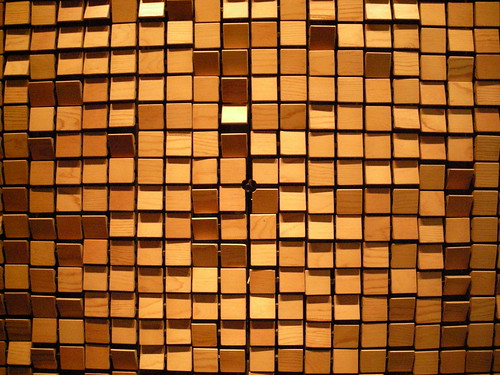
The walk started as I left ITP and walked past the "wooden mirror" - that dot in the middle is a camera!  Photo sensor to the max!
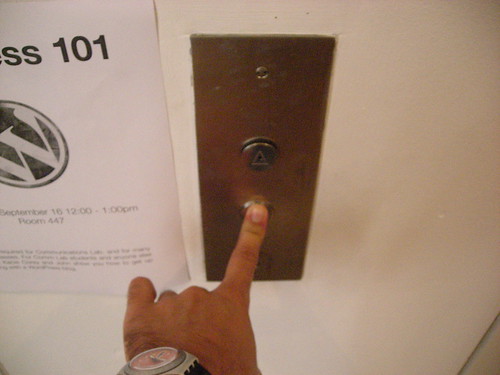
 
I walked on towards the elevator and interacted with a sensor on the elevator button.  Once I got inside, the button for downstairs had already been pushed, so I didn't get two sensors in one interaction...
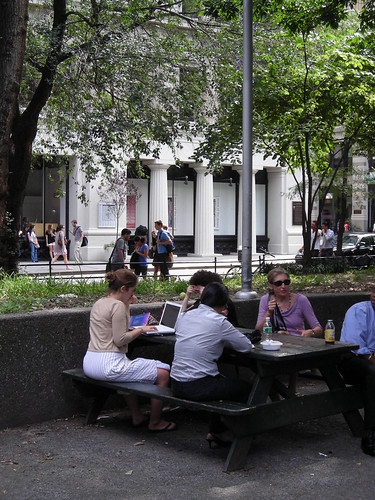
 
From there I walked into Washington Square Park, where I saw this woman tapping away on the sensors in her computer's keyboard.
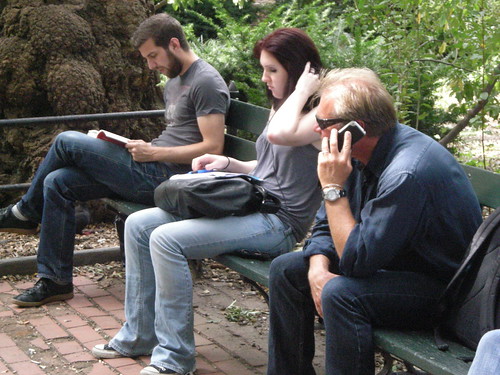
Across the way, this guy was talking on his phone - the microphone is a sensor measuring the output of his voice.
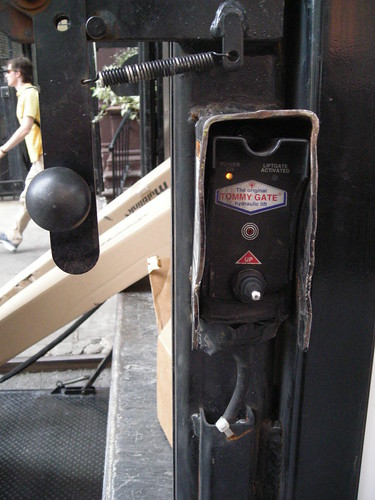
Soon after I walked past some folks loading a truck with a lift.  They didn't want to be in the photo, so I just snagged a picture of this sensor, which caused the lift to move up and down.
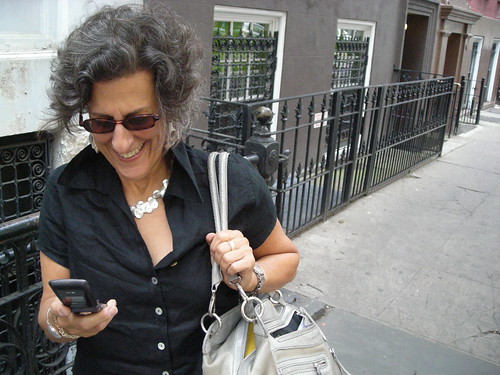
This woman was a tad more accommodating, and cracked up as I took a picture of her texting away - and more importantly, pressing the sensors of the buttons on her phone!
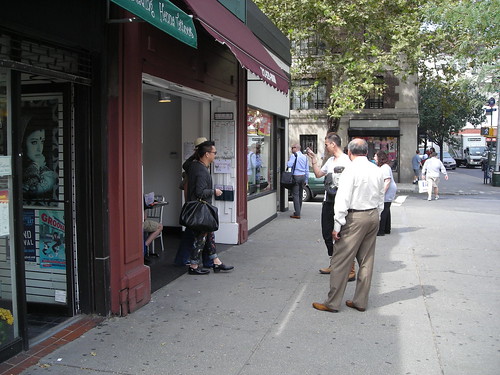
This guy was taking a picture of his friends on the street - talk about sensors:  photo sensor, distance sensor, sensor on the camera's button - techno overload!
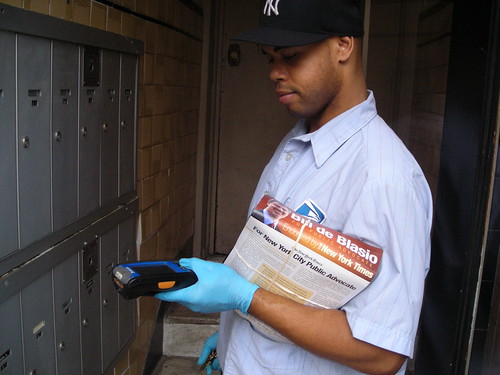
This postal worker had a fancy-schmancy device with a touch screen sensor, and he was kind enough to let me snap a shot of him using it.
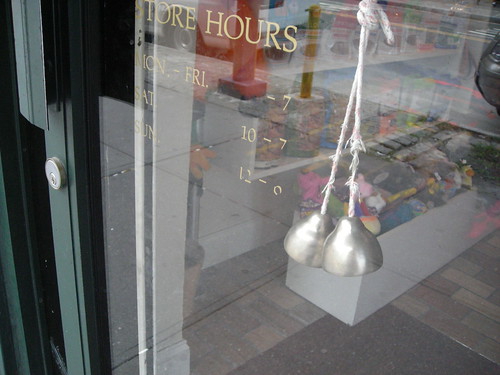
 
Debateable as to whether it's "really" a sensor, but it seemed like maybe these bells could qualify as a sensor to the door's motion.
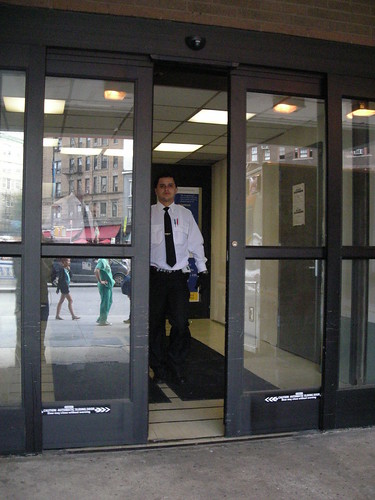
 
At St. Vincent's Hospital, the ER doors were equipped with motion sensors to open at a moment's notice.
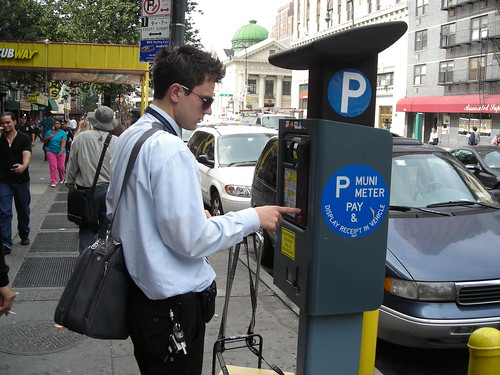
 
Meanwhile, New York's new parking meter slash computers provided this guy with a satisfying button press.
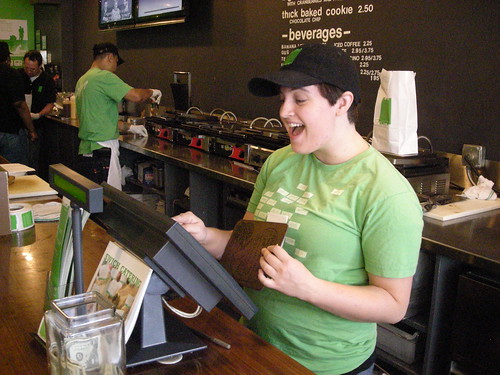
 
This restaurant employee uses a touch screen sensor all day, and is damned excited about it!
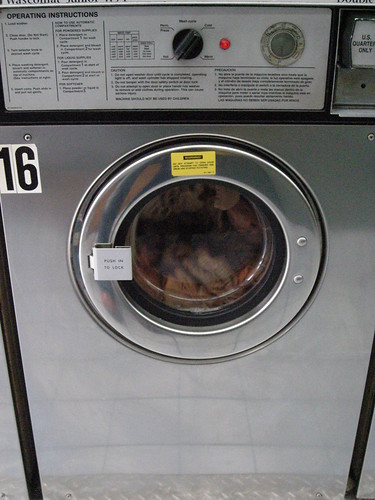
 
Finally, I arrived to pick up my laundry and noticed this load in progress: it's using a sensor to measure water levels before it starts to spin.
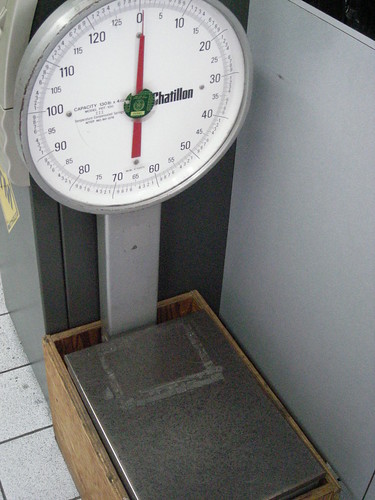
 
This scale is a sensor for laundry weight, and how much I'm going to be fleeced for keeping clean!
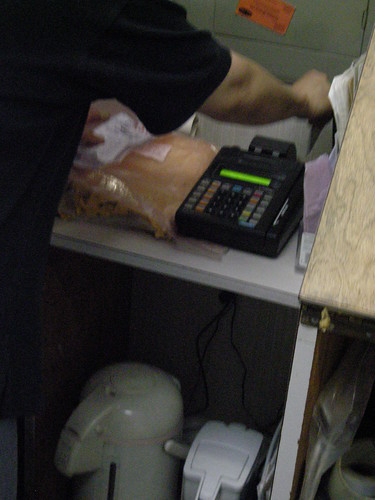
 
The credit card machine has two sensors:  one to read the magnetic stripe on the card...
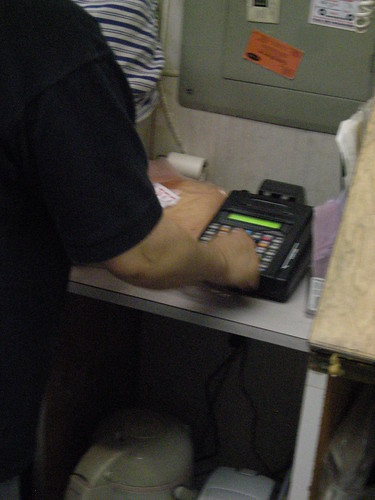
 
...and the other to enter data via the key pad.

So I concluded my sensor walk:  fresh laundry in hand, and a new and unique perspective on my daily route home.

I Am Jack's Applications Presentation

Our Group (Group 2!) had the distinct privilege of being one of the first two to present in Red's Applications class.  We had to come up with a reaction to the Vito Acconci's presentation last week, and the video above is where it's at.  Themes we tackled included the difficulty of connection, connection as a universal challenge, and connection over technology.  Check it out above - thanks to all our super accommodating subjects!

Monday, September 14, 2009

Sol Lewitt At Columbus Circle

 
The Architect's Newspaper Blog has a nice mention of a Sol Lewitt installation that was unveiled yesterday at the Columbus Circle subway station.  Seems like a prime candidate for an ITP field trip!

Sunday, September 13, 2009

Medical Data, Trending, And Visualization

Wired has a pretty nice piece about aggregate medical data trending, and some pretty solid visualizations to go along with it.  Definitely worth a look.

Reactions To "As We May Think"

Finished up reading Vannevar Bush's "As We May Think" from the 1945 Atlantic, and have to say it was pretty entertaining.  Everything about the article is quaint, from the tone, to the ridiculously involved solutions to problems that have since ceased to even exist.  That being said, Bush's insight is remarkable, and he truly offers an amazing amount of foresight in regard to the problems that would be facing the world of information technology in the coming decades.

One interesting component of the article is how evident it is that it was written pre-transistor.  Almost all of Bush's solutions center around vacuum tubes and microfilm as the innovations of the day.  This leads them to be surprisingly involved, and often overly complex.  By contrast, the transistor enabled many of his innovations to be implemented in simple and beautiful ways.  It's yet another clear reminder of just how much the transistor transformed the climate of technology.

Saturday, September 12, 2009

Hello World.


Welcome to the first in a horribly large number of posts in, around, and about, the life of a student at Tisch's Interactive Telecommunications Program.  The student in question is me, Patrick Proctor.  Here I'll be outlining my progress in the program, projects and coursework, and giving general perspective on anything that happens to suit my fancy. 

If you'd like to see what I'm up to outside of school you can check out my (painfully out of date) personal website, or the blog I run called Hippies Are Dead.  See you out there!